German Umlauts & ß: Sounds and Typing
June 5, 2026 • GermanNow • 6 minute read
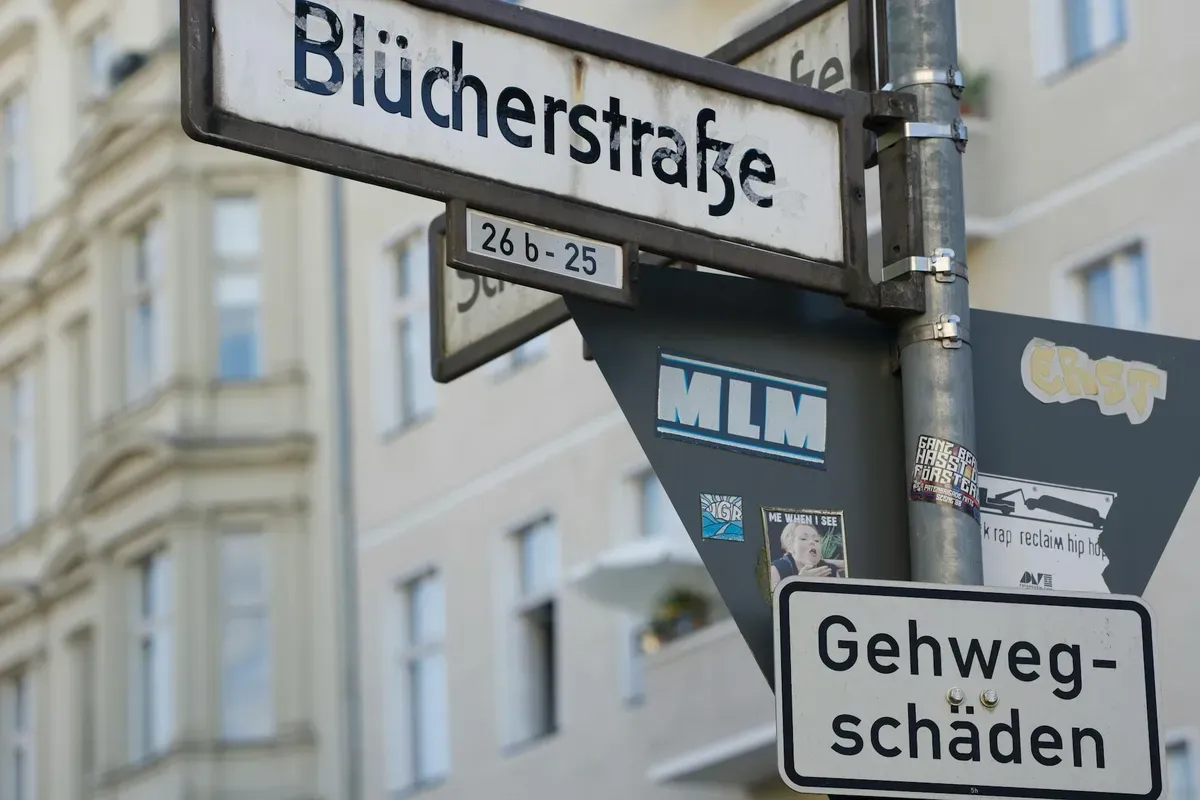
Table of Contents
German hands you four letters the English alphabet never taught you: three dotted vowels — ä, ö, ü — and one curvy consonant, ß. They look like decoration, but they are full letters that change meaning. Miss the dots on schön and you have written schon, a different word. Get them right and you suddenly sound a lot more German. The catch is that English speakers struggle in two ways at once: they can’t make the sounds, and they don’t know how to type them. This guide fixes both.
The one rule that unlocks ö and ü
English keeps two things glued together: where your tongue sits and whether your lips are rounded. Front vowels like “ee” and “eh” come with spread lips; back vowels like “oh” and “oo” come with rounded lips. German pries them apart. An umlaut takes a front tongue position and forces rounded lips on top of it.
So to say ö, hold the “eh” of bed, then slowly round your lips as if to say “oh” — without letting your tongue slide back. To say ü, hold the “ee” of see, then round your lips as if to say “oo,” keeping the tongue high and forward. The single most common mistake is the tongue creeping backward, which collapses ü into a plain “oo.” Keep it forward and you’ve got it.
ä — the easy one
ä barely needs the front-tongue trick: it’s close to the English “e” in bed. Long, it’s a drawn-out “eh” (think air without the R); short, it’s a crisp “eh.”
| German | English |
|---|---|
| Mädchen | girl |
| spät | late |
| Käse | cheese |
Watch out for spät — it’s “shpeht,” not “shpaht.” ä is a front vowel, never the open “ah” of father. You’ll meet it constantly in plurals, like Mädchen.
ö — “eh” tongue, “oh” lips
This is the sound with no English twin. Round your lips for “oh” but keep your tongue parked where it sits for “eh.”
| German | English |
|---|---|
| schön | beautiful |
| hören | to hear |
| öffnen | to open |
A useful British near-miss for long ö: the vowel in bird, but without the R. Practice the everyday word schön and the verb hören until the rounding feels automatic.
ü — “ee” tongue, “oo” lips
Start from a long “ee,” then push your lips into a tight “oo.” If you know French, it’s the vowel in tu.
| German | English |
|---|---|
| Tür | door |
| grün | green |
| fünf | five |
Say Tür as “tewr,” not “toor.” This sound shows up everywhere, from the colour grün to the number fünf.
Why the dots matter
Umlauts are real letters, not optional accents you can skip the way you might in casual French. Leaving them off usually produces either nonsense or, worse, a different real word. They also do grammatical heavy lifting: most plurals and many comparatives are marked by an umlaut alone (Mutter → Mütter, groß → größer). If you can’t hear the dot, you can’t hear the plural.
| Without umlaut | With umlaut | What changed |
|---|---|---|
| schon | schön | already → beautiful |
| Mutter | Mütter | mother → mothers |
| fuhr | für | drove → for |
The tiny word für (“for”) proves the point: drop the dots and you get fur, which isn’t German at all.

Enjoying this?
Umlauts stick faster when you hear them daily. Grab our free PDF of the 100 most common German words — every umlaut, with audio — sent straight to your inbox.
The ß (Eszett): one letter, sharp S
ß is a single letter for a sharp, voiceless /s/ — the hiss in English kiss, never a “z” buzz. Its name, Eszett, literally spells “S-Z,” and it’s also called the scharfes S (“sharp S”). It never starts a word, so it only ever turns up in the middle or at the end.
The reformed spelling rules make ß a handy reading aid tied to the vowel before it:
- ß after a long vowel or a diphthong (ei, au, eu): Straße (street), groß (big), Fuß (foot), weiß (white).
- ss after a short vowel: Wasser (water), muss (must), dass (the conjunction “that”).
See ß and you know the vowel before it is long; see ss and it’s short. That’s why reisen (to travel, soft /z/) and reißen (to tear) are different words. You’ll write the street word Straße, the size word groß, and the colour weiß with ß because each has a long vowel or diphthong.
Typing them on any device
When the real characters aren’t available — a locked-down keyboard, a URL, an old form — German has officially accepted substitutions: write ae, oe, ue, ss. So Müller becomes Mueller and Köln becomes Koeln. Use a bare vowel and you’ve changed the word, so it’s Mueller, never Muller. Reserve these for when you truly can’t type the letter; in normal writing the real characters are expected.
For everyday typing, learn your device’s shortcut:
- Mac (easiest): hold Option + u, release, then press the vowel —
a,o, oru— to get ä/ö/ü. For ß, press Option + s. - Windows: the US-International layout lets you type
"then the vowel for the umlaut, and right-Alt + s for ß. Alt codes also work on a numpad: ä =Alt+0228, ö =Alt+0246, ü =Alt+0252, ß =Alt+0223. - iPhone & Android: long-press the base letter on the on-screen keyboard, then slide to the variant — hold
a/o/ufor the umlauts, holdsfor ß.
| Letter | Type instead | Greeting using it |
|---|---|---|
| ü | ue | Tschüss → Tschuess |
| ö | oe | schön → schoen |
| ß | ss | Straße → Strasse |
Even a casual Tschüss (“bye”) becomes Tschuess under the workaround — handy to know when you’re texting from a borrowed laptop.
Where to go next
You now have the whole toolkit: the front-tongue, rounded-lips rule for ö and ü, the long-vowel logic behind ß, and a shortcut for every device. The fastest way to lock it in is to meet these letters in real words, so pour them into your reviews — our guide on how to memorize German vocabulary fast pairs nicely here. The colours you just practised, like grün, get a full workout in the German colours vocabulary guide, and fünf is your gateway to the numbers 1–100 counting guide. Round your lips, trust the dots, and keep going — you’re closer than you think.
Quick check: umlauts & ß
5 quick questions to see what stuck.
-
How do you make the ö sound?
Ö keeps the front “eh” tongue (as in bed) but rounds the lips like “oh.”
-
Dropping the dots is harmless — “schön” and “schon” mean the same thing.
schön means beautiful; schon means already. The umlaut changes the word.
-
Match each spelling to its rule.
Tap a German word, then its English meaning to pair them.
German
English
-
Type the ä-substitution for “Mädchen” when you can't type the umlaut: M___dchen
ä → ae, ö → oe, ü → ue, ß → ss. So Mädchen becomes Maedchen.
-
Which word correctly uses ss (short vowel)?
dass has a short a, so ss. Fuß, weiß and groß all have long vowels/diphthongs, so ß.
Related Articles


Keep going with German.
Get our starter pack of the 100 most common words — and the occasional new lesson when one's worth reading.