Bitte in German: Please, You're Welcome, and More
June 5, 2026 • GermanNow • 5 minute read
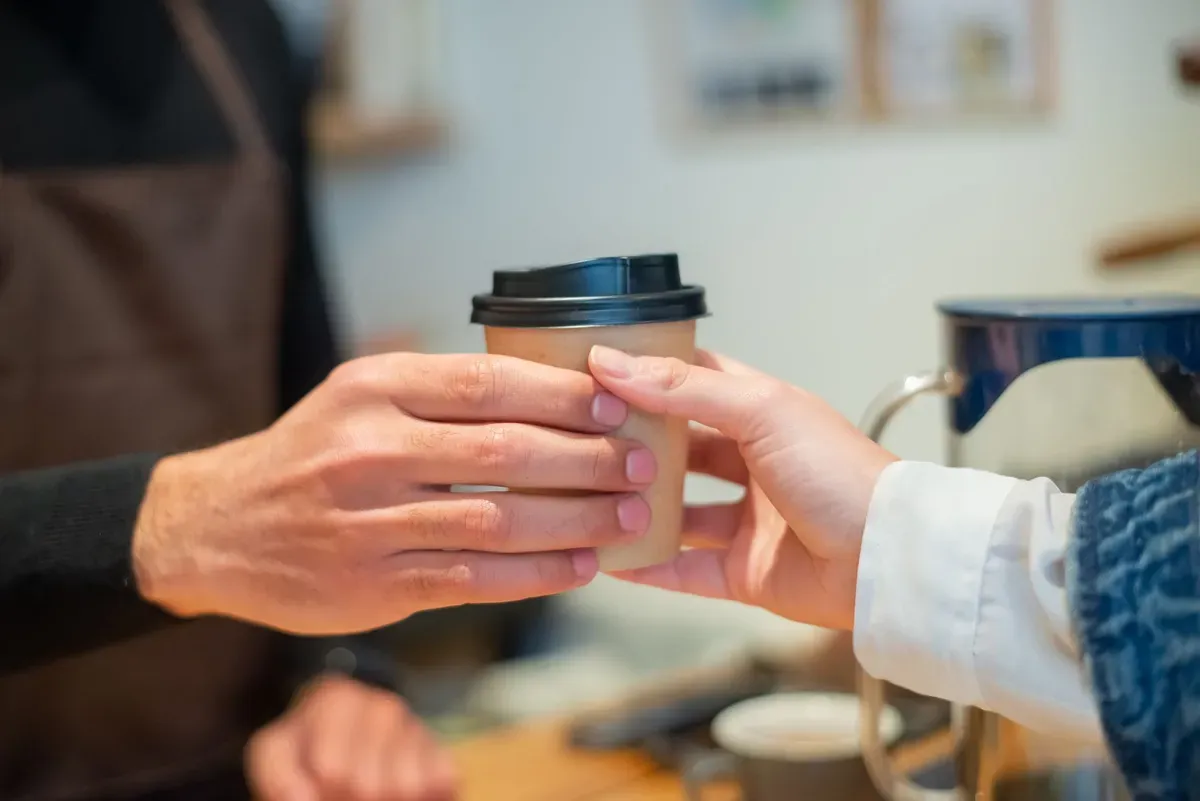
Table of Contents
You learn that bitte means “please,” feel good about it, and then a waiter sets a plate in front of you and says it. A clerk answers the phone with it. You say danke, someone replies bitte, and suddenly you’re not sure whose turn it is. One little word is doing six jobs, and nobody warned you. Let’s fix that — by the end you’ll recognize every flavor of bitte on sight.
Why “bitte” confuses English speakers
English splits these jobs across different phrases: please, you’re welcome, here you go, pardon, go ahead. German pours them all into bitte and lets context and tone decide which one you mean. That’s efficient for native speakers and bewildering for learners, because the same word that politely requests a coffee also hands you the coffee, also thanks-you-back for thanking them. Once you stop expecting a one-to-one translation and start reading the situation, bitte clicks into place.
Where “bitte” comes from: the verb bitten
Everything traces back to one verb: bitten, “to ask for, to request.” It’s irregular — bitten, bat, hat gebeten — and it pairs with the preposition um: Ich bitte um Ihre Aufmerksamkeit (“I ask for your attention”). There’s also a noun, die Bitte (“the request”): Ich habe eine Bitte (“I have a favor to ask”).
So bitte is, at its root, “I ask you.” That’s why it softens a request into “please” — and why it stretches to cover granting requests, handing things over, and closing them out. The meanings aren’t random; they all orbit the idea of asking and giving.
The everyday jobs of bitte
Here’s the map — each meaning tied to a moment you’ll actually be in.
| German | English | When |
|---|---|---|
| Einen Kaffee, bitte. | A coffee, please. | making a request |
| Bitte tu das nicht. | Please don't do that. | softening a command |
| Danke! — Bitte. | Thanks! — You're welcome. | answering danke |
| Bitte sehr. | Here you go. | handing something over |
| Wie bitte? | Sorry? / Pardon? | asking to repeat |
| Nach Ihnen, bitte. | After you. | at a door or queue |
| Ja, bitte? Wie kann ich helfen? | Yes? How can I help you? | a clerk's opener |
Please — making a request. The most common spot is at the end: Einen Kaffee, bitte. German directness still expects courtesy, so don’t drop it. Front position adds emphasis: Bitte, kannst du mir helfen? (“Please, can you help me?”).
You’re welcome — answering danke. When someone says danke, the reflexive reply is bitte. That’s it. (More on why you stop there in a moment.)
Here you go — handing something over. Passing the salt, returning your change — Germans say bitte, often warmed up to bitte sehr or bitte schön, as the thing physically changes hands.
Pardon? — Wie bitte? Didn’t catch that? Wie bitte? (literally “how please?”) is the neutral, polite “could you repeat that?” Keep the tone flat — a sharp, rising Wie bitte?! flips to “I beg your pardon?!” The words are identical; tone carries the meaning.
Go ahead / after you. At a doorway, Nach Ihnen, bitte (“after you”). Inviting someone to keep talking? Du wolltest etwas sagen? Bitte. (“You wanted to say something? Go ahead.”)
May I help you? — at the counter. A shopkeeper or server greets you with Ja, bitte? or Bitte schön? — “Yes? What can I get you?” Don’t hear it as “please”; it’s an invitation to order.

Enjoying this?
One word, six jobs — and German is full of these. Grab our free PDF of the 100 most useful German words, sent by email, and start recognizing them everywhere.
bitte schön vs. bitte sehr
Both add a layer of warmth or formality, and both usually mean “you’re very welcome” or “here you go.” Plain bitte is the safe default; the upgrades just polish it.
| German | English | Register |
|---|---|---|
| bitte | you're welcome / here you go | neutral, all-purpose |
| bitte schön | you're very welcome | warm, friendly |
| bitte sehr | there you are | slightly more formal |
A handy convention: the schön/sehr tends to mirror the thanks. Danke schön gets answered with bitte schön; Danke sehr with bitte sehr. And don’t be misled — the schön here doesn’t mean “beautiful.” In these set phrases it just intensifies the politeness, closer to “kindly.”
The danke–bitte rule: don’t loop
Here’s the rule that stops the most common beginner stumble:
A: Danke. → B: Bitte. → done.
In English we volley: “Thank you.” — “No, thank you.” That instinct does not transfer. If you answer bitte with another danke, your partner may dutifully say bitte again, and you’ve launched a danke–bitte–danke–bitte loop nobody knows how to exit. The fix is simple: you don’t reply to bitte. Once it’s said, the courtesy exchange is closed.
If you’re still sorting out when to use the formal Sie in moments like this, the guide on German tipping and etiquette for travelers walks through real service situations where bitte and danke fly back and forth.
Other ways to say “you’re welcome”
Bitte always works, but it’s nice to vary your reply once it’s automatic.
| German | English | Register |
|---|---|---|
| Gern geschehen. | My pleasure. | warm, standard |
| Gerne. | Gladly. | friendly, very common |
| Kein Problem. | No problem. | casual |
| Keine Ursache. | Don't mention it. | casual |
The word gern (and its twin gerne) is your everyday casual upgrade — drop a quick Gerne! when bitte feels too plain.
Common mistakes to avoid
- Replying to bitte with danke. The loop. Thank, you’re-welcome, stop.
- Thinking bitte only means “please.” Learn the jobs — please, you’re welcome, here you go, pardon, go ahead, may-I-help-you.
- Reading schön as “beautiful.” In bitte schön it just means “kindly.” It’s not a compliment.
- Saying Ja, danke to decline. Ja, bitte accepts; Nein, danke declines. Mixing them up gets you a second coffee you didn’t want.
- Capitalizing bitte mid-sentence. It’s lowercase as the courtesy word; only die Bitte (the noun) is capitalized.
- A sharp tone on Wie bitte? Keep it flat for “pardon?” A rising edge reads as “excuse me?!”
- Confusing bitte with bitten. Bitten is a full verb (“to ask,” used with um); bitte is the courtesy particle. Ich bitte dich means “I’m asking you,” not “please you.”
Master this one word and you’ve unlocked a huge chunk of everyday German courtesy. Next, get the words around it solid — counting your order with the German numbers 1–100 guide, then making real requests with German modal verbs like können, müssen, and wollen. Order that coffee with confidence — einen Kaffee, bitte — and enjoy hearing bitte come right back at you.
Quick check: bitte
4 quick questions to see what stuck.
-
Someone says danke to you. What's the standard reply?
Danke is answered with bitte (you're welcome) — and that closes the exchange.
-
After someone says bitte to you, you should reply with danke.
Bitte closes the exchange. Replying with danke risks an endless danke-bitte loop.
-
Match each use of bitte to the situation.
Tap a German word, then its English meaning to pair them.
German
English
-
Accept an offer of more coffee: "Noch einen Kaffee?" — "Ja, ___."
Ja, bitte means "yes, please." To decline you'd say Nein, danke.
Related Articles

Keep going with German.
Get our starter pack of the 100 most common words — and the occasional new lesson when one's worth reading.